Showing posts with label Bride Christian church God Jesus kingdom Overcomer Parables Tabernacles. Show all posts

Monday, April 12, 2010

KINGDOM PRESENT - THE KINGDOM PARABLES


7 When he noticed how the guests picked the places of honor at the table, he told them this parable: 8 “When someone invites you to a wedding feast, do not take the place of honor, for a person more distinguished than you may have been invited. 9 If so, the host who invited both of you will come and say to you, ‘Give this man your seat.’ Then, humiliated, you will have to take the least important place. 10 But when you are invited, take the lowest place, so that when your host comes, he will say to you, ‘Friend, move up to a better place.’ Then you will be honored in the presence of all your fellow guests. 11 For everyone who exalts himself will be humbled, and he who humbles himself will be exalted.” 12 Then Jesus said to his host, “When you give a luncheon or dinner, do not invite your friends, your brothers or relatives, or your rich neighbors; if you do, they may invite you back and so you will be repaid. 13 But when you give a banquet, invite the poor, the crippl ed, the lame, the blind, 14 and you will be blessed. Although they cannot repay you, you will be repaid at the resurrection of the righteous.” (Luke 14:7-14)

While not strictly a kingdom parable, it certainly is a parable about kingdom behaviour.

The story is about a feast, but the implications of what Jesus is saying extend far wider than eating!

Jesus is teaching a lesson on motivation.

Why do I do something? Am I thinking, "What is in this for me?" For that is the way of the world, the way of human nature. For we are born selfish. Watch a child's behaviour. It is all too often about 'I'. "I will be good if you give me a play station!" We know it! We are manipulated by it! For we love our kids.

Unfortunately, as we grow older, we don't change, we just get more subtle about it! Much of our behaviour remains motivated by self interest.

In this parable Jesus 'takes a dig at' pride of position and self serving generosity. A sideswipe at two of the three motivators of men - 'girls, gold and glory'!

This story really gets to the heart of what true Christianity is. For genuine, mature, Jesus believers are required to put God and others before themselves. The Pharisees and Sadducees asked Jesus about the requirements of following in His ways.

"37 Jesus replied: ”‘Love the Lord your God with all your heart and with all your soul and with all your mind.’ 38 This is the first and greatest commandment. 39 And the second is like it: ‘Love your neighbor as yourself.’ 40 All the Law and the Prophets hang on these two commandments.” (Matthew 22:37-40)

We all know this, but do we live it?

It worries me when I hear evangelists say, "Come to Jesus and life will be wonderful." Many too, will (falsely) preach health and wealth to accompany conversion.

They are both right and wrong. But they are wrong viewed from the natural perception of the non believers they are preaching to. Misleading in fact. For the non believer will understand what they are saying to be more of the values they already have.

But the reality of Christian living is that happiness comes not from receiving, but giving, not from power and position, but from humility, of placing others ahead of yourself. Values that are very different, the opposite of those that apply in the world.

The form of 'evangelism' applied by Jesus in the parable involving the rich young ruler was very different!

22 When Jesus heard this, he said to him, “You still lack one thing. Sell everything you have and give to the poor, and you will have treasure in heaven. Then come, follow me.” (Luke 18:22)

Do we preach the sacrifice that brings true happiness?

29 “I tell you the truth,” Jesus said to them, “no one who has left home or wife or brothers or parents or children for the sake of the kingdom of God 30 will fail to receive many times as much in this age and, in the age to come, eternal life.” (Luke 18:29-30)

Or about the meek, the humble, obtaining the inheritance?

5 Blessed are the meek, for they will inherit the earth.(Matthew 5:5)

May we be more honest in how we present the kingdom. And lead by example, through living a genuine kingdom lifestyle.

(Continued next week)

Sunday, March 21, 2010

KINGDOM PRESENT - THE KINGDOM PARABLES


THE GREAT PHYSICIAN

10 While Jesus was having dinner at Matthew’s house, many tax collectors and “sinners” came and ate with him and his disciples. 11 When the Pharisees saw this, they asked his disciples, “Why does your teacher eat with tax collectors and ‘sinners’?” 12 On hearing this, Jesus said, “It is not the healthy who need a doctor, but the sick. 13 But go and learn what this means: ‘I desire mercy, not sacrifice.’ For I have not come to call the righteous, but sinners.” (Matthew 9:10-13)

This brief parable should turn the church upside down! It did originally. But then the church became either, a part of the establishment (eg. Roman Catholic, Orthodox and Anglican), or indirectly associated with the establishment (eg. most Protestant churches today - from 'protesting' to 'conformity').

Most of the people Jesus mixed with, those whom He came to bring into His kingdom, had been rejected by the religious establishment of the time as being beyond salvation. But Jesus came to save the hurting and the lost. Not the righteous, but the sinners, as the parable states. This was anathema to the religious people of the day.

2 But the Pharisees and the teachers of the law muttered, “This man welcomes sinners and eats with them.” (Luke 15:2)

We all know this and accept it in theory. We may run programmes to help the poor, or go out on mission trips, but I would suggest that most of our time and money (the best barometer) is spent on ourselves, maintaining ministers, buildings and programmes that predominantly fit in with the middle class establishment of our society. The emphasis is on meeting our own needs, to become comfortable within the environment in which we live.

The early New Testament church was definitely not part of the establishment. It was persecuted. It went underground in many cases, simply to ensure its survival.

The Church Persecuted and Scattered

On that day a great persecution broke out against the church at Jerusalem, and all except the apostles were scattered throughout Judea and Samaria. 2 Godly men buried Stephen and mourned deeply for him. 3 But Saul began to destroy the church. Going from house to house, he dragged off men and women and put them in prison. (Acts 8:1-3)


Persecution is promised still, to those who wish to enter the kingdom. For our lifestyle is to be radically different to that of the world.

10 Blessed are those who are persecuted because of righteousness, for theirs is the kingdom of heaven. 11 “Blessed are you when people insult you, persecute you and falsely say all kinds of evil against you because of me. 12 Rejoice and be glad, because great is your reward in heaven, for in the same way they persecuted the prophets who were before you. (Matthew 5:10-12)

The disciples of Jesus were a classic example of completely unsuitable people chosen to be 'ministers'. Uneducated, rejected by the religious establishment, who only chose the best and brightest to become disciples of the Rabbis. Yet, in spite of their ups and downs when Jesus was teaching them, after His death, resurrection and ascension, they changed the course of history right through to the present day. A rabble of uneducated men became world changers! For Jesus knew their hearts!

What do we look for today in our ministers? The best and brightest, with quality theological degrees .......... Is this the example Jesus provided to us?

You will, of course, quote Paul, as a rabbinical style example. Yes he was trained. But the first thing that happened to him was to be broken of his training. Let us read what Easton's Bible Dictionary had to say about it.

As he and his companions rode on, suddenly at mid-day a brilliant light shone round them, and Saul was laid prostrate in terror on the ground, a voice sounding in his ears, “Saul, Saul, why persecutest thou me?” The risen Saviour was there, clothed in the vesture of his glorified humanity. In answer to the anxious inquiry of the stricken persecutor, “Who art thou, Lord?” he said, “I am Jesus whom thou persecutest” (Acts 9:5; 22:8; 26:15).

This was the moment of his conversion, the most solemn in all his life. Blinded by the dazzling light (Acts 9:8), his companions led him into the city, where, absorbed in deep thought for three days, he neither ate nor drank (9:11). Ananias, a disciple living in Damascus, was informed by a vision of the change that had happened to Saul, and was sent to him to open his eyes and admit him by baptism into the Christian church (9:11–16). The whole purpose of his life was now permanently changed.

Immediately after his conversion he retired into the solitudes of Arabia (Gal. 1:17), perhaps of “Sinai in Arabia,” for the purpose, probably, of devout study and meditation on the marvellous revelation that had been made to him. “A veil of thick darkness hangs over this visit to Arabia. Of the scenes among which he moved, of the thoughts and occupations which engaged him while there, of all the circumstances of a crisis which must have shaped the whole tenor of his after-life, absolutely nothing is known. ‘Immediately,’ says St. Paul, ‘I went away into Arabia.’ The historian passes over the incident [comp. Acts 9:23 and 1 Kings 11:38, 39]. It is a mysterious pause, a moment of suspense, in the apostle’s history, a breathless calm, which ushers in the tumultuous storm of his active missionary life.” Coming back, after three years, to Damascus, he began to preach the gospel “boldly in the name of Jesus” (Acts 9:27), but was soon obliged to flee (9:25; 2 Cor. 11:33) from the Jews and betake himself to Jerusalem. Here he tarried for three weeks, but was again forced to flee (Acts 9:28, 29) from persecution. He now returned to his native Tarsus (Gal. 1:21), where, for probably about three years, we lose sight of him. The time had not yet come for his entering on his great life-work of preaching the gospel to the Gentiles.


To become effective once more, the church needs to follow the example of Scripture and Jesus and become a grassroots organism. Ministering to the 'sinners', showing 'mercy' to those in need. Becoming outward rather than inwards focused.

Talk is easy. But are we ready to change? Are we prepared to meet the challenge?

Sunday, March 14, 2010

KINGDOM PRESENT - THE KINGDOM PARABLES


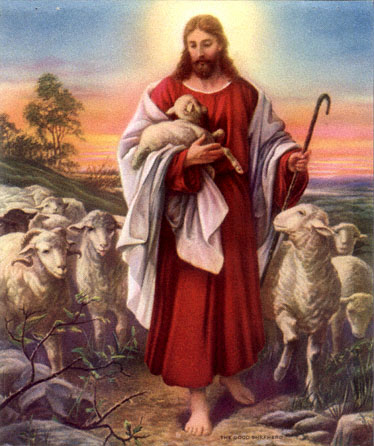
THE SHEPHERD AND HIS FLOCK

“I tell you the truth, the man who does not enter the sheep pen by the gate, but climbs in by some other way, is a thief and a robber. 2 The man who enters by the gate is the shepherd of his sheep. 3 The watchman opens the gate for him, and the sheep listen to his voice. He calls his own sheep by name and leads them out. 4 When he has brought out all his own, he goes on ahead of them, and his sheep follow him because they know his voice. 5 But they will never follow a stranger; in fact, they will run away from him because they do not recognize a stranger’s voice.” 6 Jesus used this figure of speech, but they did not understand what he was telling them. 7 Therefore Jesus said again, “I tell you the truth, I am the gate for the sheep. 8 All who ever came before me were thieves and robbers, but the sheep did not listen to them. 9 I am the gate; whoever enters through me will be saved. He will come in and go out, and find pasture. 10 The thief comes only to steal and kill and destroy; I have come that they may have life, and have it to the full. 11 “I am the good shepherd. The good shepherd lays down his life for the sheep. 12 The hired hand is not the shepherd who owns the sheep. So when he sees the wolf coming, he abandons the sheep and runs away. Then the wolf attacks the flock and scatters it. 13 The man runs away because he is a hired hand and cares nothing for the sheep. 14 “I am the good shepherd; I know my sheep and my sheep know me— 15 just as the Father knows me and I know the Father—and I lay down my life for the sheep. 16 I have other sheep that are not of this sheep pen. I must bring them also. They too will listen to my voice, and there shall be one flock and one shepherd. 17 The reason my Father loves me is that I lay down my life—only to take it up again. 18 No one takes it from me, but I lay it down of my own accord. I have authority to lay it down and authority to take it up again. This command I received from my Fath er.” (John 10:1-18)


This morning, (Sunday) I was lying in bed listening to the radio. There was a programme on about teaching religion in schools.

Setting a benchmark, 55% of New Zealanders considered themselves Christian (most are nominal though), 30% atheist or agnostic, with 15% following other religions.

In essence, the conclusion was that it was acceptable to teach 'religious moral values' without teaching any particular 'religion'. One universal God etc., etc. The one world church movement is growing, and sadly, is supported by many 'Christians'.

The Christians, and others, had either not read, misunderstood, or rejected this parable. For Jesus was warning here about this 'politically correct', worldly conclusion.

According to Jesus, there is only one way, one gate, to enter the kingdom of God. Either Jesus is lying, which means we shouldn't believe anything He says, or He is speaking the truth, informing us of an unequivocal fact, one which we ignore at our peril.

He reiterates this truth in Matthew.

The Narrow and Wide Gates

13 “Enter through the narrow gate. For wide is the gate and broad is the road that leads to destruction, and many enter through it. 14 But small is the gate and narrow the road that leads to life, and only a few find it. (Matthew 7:13-14)

The choices are the broad gate of inclusion and destruction, or the narrow gate of life, now and for eternity.

This choice is mine. This choice is yours. Which gate will you choose?

The parable continues to say that there are two groups of sheep that will be combined into one flock, in the kingdom.

16 I have other sheep that are not of this sheep pen. I must bring them also. They too will listen to my voice, and there shall be one flock and one shepherd. (John 10:16)

The two lots of sheep that are to join together are the Jews who choose to follow Jesus, along with the gentiles, whom the Jews of the time, and many still today, would not consider could ever be acceptable to God, without first becoming Jews.

Peter, the Jew, had to learn this lesson through the vision he received from the Lord about all animals now being clean to eat.

15 “As I began to speak, the Holy Spirit came on them as he had come on us at the beginning. 16 Then I remembered what the Lord had said: ‘John baptized with water, but you will be baptized with the Holy Spirit.’ 17 So if God gave them the same gift as he gave us, who believed in the Lord Jesus Christ, who was I to think that I could oppose God?” 18 When they heard this, they had no further objections and praised God, saying, “So then, God has granted even the Gentiles repentance unto life.” (Acts 11:15-18)

I look forward to the day when we will all, Jewish and gentile followers of Jesus will be gathered into the one flock with one shepherd.

Thank you Lord.

Sunday, February 28, 2010

KINGDOM PRESENT - THE KINGDOM PARABLES


THE PARABLE OF THE GREAT BANQUET

15 When one of those at the table with him heard this, he said to Jesus, “Blessed is the man who will eat at the feast in the kingdom of God.” 16 Jesus replied: “A certain man was preparing a great banquet and invited many guests. 17 At the time of the banquet he sent his servant to tell those who had been invited, ‘Come, for everything is now ready.’
18 “But they all alike began to make excuses. The first said, ‘I have just bought a field, and I must go and see it. Please excuse me.’ 19 “Another said, ‘I have just bought five yoke of oxen, and I’m on my way to try them out. Please excuse me.’ 20 “Still another said, ‘I just got married, so I can’t come.’ 21 “The servant came back and reported this to his master. Then the owner of the house became angry and ordered his servant, ‘Go out quickly into the streets and alleys of the town and bring in the poor, the crippled, the blind and the lame.’ 22 ”‘Sir,’ the servant said, ‘what you ordered has been done, but there is still room.’ 23 “Then the master told his servant, ‘Go out to the roads and country lanes and make them come in, so that my house will be full. 24 I tell you, not one of those men who were invited will get a taste of my banquet.’” (Luke 14:15-24)


This illustration of the guest list at a feast is both an encouragement, and a warning, for those who desire to be a part of the kingdom of God.
On the encouraging side, we don't have to be spiritual superstars in order to enter the kingdom. God looks not at our position, our clothing or our spiritual gifts, but at our heart attitude towards Him.

32 “Well said, teacher,” the man replied. “You are right in saying that God is one and there is no other but him. 33 To love him with all your heart, with all your understanding and with all your strength, and to love your neighbor as yourself is more important than all burnt offerings and sacrifices.” 34 When Jesus saw that he had answered wisely, he said to him, “You are not far from the kingdom of God.” And from then on no one dared ask him any more questions. (Mark 12:32-4)

The kingdom is accessed through the application in our lives of the 'golden rule', agape loving (a love involving action, not just mental assent) of both God and others.

As we saw from the Parable of the Sower last week, perseverance is required.

15 But the seed on good soil stands for those with a noble and good heart, who hear the word, retain it, and by persevering produce a crop.

Our heart attitude, as demonstrated through our actions, is the invitation that enables us to attend the feast, to enter the kingdom of God.

The warning, on the other hand, was directed, at the time, to the religious people of the day.

20 For I tell you that unless your righteousness surpasses that of the Pharisees and the teachers of the law, you will certainly not enter the kingdom of heaven. (Matthew 5:20)

While we all see the problems of the Pharisees, we are often blinded to the reality that these characteristics are the potential downfall in leadership of any generation.

Let's look briefly at the 'woes', a list of warnings from Jesus that we need to guard against today.

13 “Woe to you, teachers of the law and Pharisees, you hypocrites! You shut the kingdom of heaven in men’s faces. You yourselves do not enter, nor will you let those enter who are trying to.(Matthew 23:13)

We must be so careful to only teach Biblical truth, not denominational theology.

Verse 14 is excluded from the NIV, but it talks about taking advantage of 'widows' ie. the easily beguiled - and the saying of long prayers!

15 “Woe to you, teachers of the law and Pharisees, you hypocrites! You travel over land and sea to win a single convert, and when he becomes one, you make him twice as much a son of hell as you are. (Matthew 23:15)

We can travel away, looking better than we are in reality, for at home people know us better.

16 “Woe to you, blind guides! You say, ‘If anyone swears by the temple, it means nothing; but if anyone swears by the gold of the temple, he is bound by his oath.’ 17 You blind fools! Which is greater: the gold, or the temple that makes the gold sacred? 18 You also say, ‘If anyone swears by the altar, it means nothing; but if anyone swears by the gift on it, he is bound by his oath.’ 19 You blind men! Which is greater: the gift, or the altar that makes the gift sacred? 20 Therefore, he who swears by the altar swears by it and by everything on it. 21 And he who swears by the temple swears by it and by the one who dwells in it. 22 And he who swears by heaven swears by God’s throne and by the one who sits on it. (Matthew 16:22-3)

Do we make additional rules in an attempt to earn holiness by human means?

23 “Woe to you, teachers of the law and Pharisees, you hypocrites! You give a tenth of your spices—mint, dill and cummin. But you have neglected the more important matters of the law—justice, mercy and faithfulness. You should have practiced the latter, without neglecting the former. 24 You blind guides! You strain out a gnat but swallow a camel. (Matthew 23:23-4)

Do we major on the minor?

25 “Woe to you, teachers of the law and Pharisees, you hypocrites! You clean the outside of the cup and dish, but inside they are full of greed and self-indulgence. 26 Blind Pharisee! First clean the inside of the cup and dish, and then the outside also will be clean. (Matthew 23:23-4)

Is our life at home in line with what we preach?

27 “Woe to you, teachers of the law and Pharisees, you hypocrites! You are like whitewashed tombs, which look beautiful on the outside but on the inside are full of dead men’s bones and everything unclean. 28 In the same way, on the outside you appear to people as righteous but on the inside you are full of hypocrisy and wickedness. (Matthew 23:27-8)

Are we really what we portray ourselves to be? We need to be honest with others.

29 “Woe to you, teachers of the law and Pharisees, you hypocrites! You build tombs for the prophets and decorate the graves of the righteous. 30 And you say, ‘If we had lived in the days of our forefathers, we would not have taken part with them in shedding the blood of the prophets.’ 31 So you testify against yourselves that you are the descendants of those who murdered the prophets. 32 Fill up, then, the measure of the sin of your forefathers! (Matthew 23:29-32)

Of course we are not like the Pharisees! But are we?

Two additional warnings precede these 'woes'.

5 “Everything they do is done for men to see: They make their phylacteries wide and the tassels on their garments long; 6 they love the place of honor at banquets and the most important seats in the synagogues; 7 they love to be greeted in the marketplaces and to have men call them ‘Rabbi.’ (Matthew 23:5-7)

Do not dress to distinguish yourself from those you lead.

8 “But you are not to be called ‘Rabbi,’ for you have only one Master and you are all brothers. 9 And do not call anyone on earth ‘father,’ for you have one Father, and he is in heaven. 10 Nor are you to be called ‘teacher,’ for you have one Teacher, the Christ. 11 The greatest among you will be your servant. 12 For whoever exalts himself will be humbled, and whoever humbles himself will be exalted. (Matthew 23:8-12)

Do not use a title. Walk in humility.

Please do not take offence with me. This is Scripture speaking. I take offence with myself when I see areas here where I am failing my God, through my thoughts and actions.

"Forgive us lord. Help us Lord become more like You."

(Continued next week)

Monday, February 15, 2010

KINGDOM PRESENT - THE KINGDOM PARABLES


PARABLE OF THE SOWER

That same day Jesus went out of the house and sat by the lake. 2 Such large crowds gathered around him that he got into a boat and sat in it, while all the people stood on the shore. 3 Then he told them many things in parables, saying: “A farmer went out to sow his seed. 4 As he was scattering the seed, some fell along the path, and the birds came and ate it up. 5 Some fell on rocky places, where it did not have much soil. It sprang up quickly, because the soil was shallow. 6 But when the sun came up, the plants were scorched, and they withered because they had no root. 7 Other seed fell among thorns, which grew up and choked the plants. 8 Still other seed fell on good soil, where it produced a crop—a hundred, sixty or thirty times what was sown. 9 He who has ears, let him hear.” (Matthew 13:1-9)"

Farming was the main occupation of the Jews of the time. Therefore they would have understood, in the natural, what Jesus was saying, more easily than many of us today do.

Even so, Jesus explained in detail what it meant.

18 “Listen then to what the parable of the sower means: 19 When anyone hears the message about the kingdom and does not understand it, the evil one comes and snatches away what was sown in his heart. This is the seed sown along the path. 20 The one who received the seed that fell on rocky places is the man who hears the word and at once receives it with joy. 21 But since he has no root, he lasts only a short time. When trouble or persecution comes because of the word, he quickly falls away. 22 The one who received the seed that fell among the thorns is the man who hears the word, but the worries of this life and the deceitfulness of wealth choke it, making it unfruitful. 23 But the one who received the seed that fell on good soil is the man who hears the word and understands it. He produces a crop, yielding a hundred, sixty or thirty times what was sown.” (Matthew 13:18-23)

Can we lose our salvation? Apparently so. As confirmed here.

13 All men will hate you because of me, but he who stands firm to the end will be saved. (Mark 13:13)

We need to nurture our faith carefully, to ensure that our seed is sown in the good soil. We choose our own soil in which to be planted! To produce a good crop we need to persevere in our faith.

36 You need to persevere so that when you have done the will of God, you will receive what he has promised. (Hebrews 10:36)

We also need an understanding of what we believe in order to remain firm in our faith. 'There is nothing as blind as blind faith!' A David's Doodling here!

Love of Money

3 If anyone teaches false doctrines and does not agree to the sound instruction of our Lord Jesus Christ and to godly teaching, 4 he is conceited and understands nothing. He has an unhealthy interest in controversies and quarrels about words that result in envy, strife, malicious talk, evil suspicions 5 and constant friction between men of corrupt mind, who have been robbed of the truth and who think that godliness is a means to financial gain. 6 But godliness with contentment is great gain. 7 For we brought nothing into the world, and we can take nothing out of it. 8 But if we have food and clothing, we will be content with that. 9 People who want to get rich fall into temptation and a trap and into many foolish and harmful desires that plunge men into ruin and destruction. 10 For the love of money is a root of all kinds of evil. Some people, eager for money, have wandered from the faith and pierced themselves with many griefs. (1 Timothy 6:3-10)


What soil are you planted in? Fortunately, in the spiritual, it is never to late to ask for a transplant!

(Continued next week)

Sunday, February 7, 2010

KINGDOM PRESENT - THE KINGDOM PARABLES


PARABLE OF THE SOWER

Hope you are not going to get too mixed up with my logic here! For we will look at the parables in alphabetical order, except for this one! And with this one, we will first look at the middle, before considering the beginning and the end! Please bear with me, for all will be revealed! (No, that is not a parable!)

The Parable of the Sower is a key parable, not only for its contents, but because Jesus took the opportunity here to explain what a parable is. Hence why we are starting in the middle.

10 The disciples came to him and asked, “Why do you speak to the people in parables?” 11 He replied, “The knowledge of the secrets of the kingdom of heaven has been given to you, but not to them. 12 Whoever has will be given more, and he will have an abundance. Whoever does not have, even what he has will be taken from him. 13 This is why I speak to them in parables: “Though seeing, they do not see; though hearing, they do not hear or understand. 14 In them is fulfilled the prophecy of Isaiah: ”‘You will be ever hearing but never understanding; you will be ever seeing but never perceiving. 15 For this people’s heart has become calloused; they hardly hear with their ears, and they have closed their eyes. Otherwise they might see with their eyes, hear with their ears, understand with their hearts and turn, and I would heal them.’ 16 But blessed are your eyes because they see, and your ears because they hear. 17 For I tell you the truth, many prophets and righteous men lon ged to see what you see but did not see it, and to hear what you hear but did not hear it. (Matthew 13:10-17)

Jesus made several points here that will help us understand the parables better.

1. All the parables are about the kingdom of heaven and the parables are all about the kingdom of heaven!

2. Knowledge about the kingdom is restricted in its distribution.

3. This knowledge is given on an 'all or nothing' basis.

4. Unbelievers will neither understand the parables, nor the kingdom lifestyle.

5. Those who do understand, and live the lifestyle, will receive a special blessing that would be the envy of many prophets and righteous people from Old Testament times.

We are so privileged to live in a time in history when the secrets of the kingdom have been revealed to those who wish to respond. This has been the case for the past 2000 years.

Today however, we are doubly blessed. For in the ongoing pattern of God since the Reformation, which has seen the gradual restoration of truths (eg. personal faith, believer baptism, Holy Spirit anointing, healing, spiritual gifts, etc.) lost from the end of the first apostolic age (from the time of the death of the apostle John), we are now experiencing the revelation that the kingdom is not only future, but also to be a present reality today.

When I was a boy, before I even believed, I could not understand the Lord's (Disciples) Prayer when it said;

10 your kingdom come, your will be done on earth as it is in heaven. (Matthew 6:10)

I was taught that it was future, but even then, had my doubts about that. For it seemed, even then in my innocence, to be worded as much in the present as in the future, along with the other petitions of the prayer.

Today, I am grateful (and relieved!) to see that there is a new and growing revelation amongst many, many, dedicated believers that 'the kingdom is for now' too.

This is both a privilege and a responsibility! Yes, there is a great blessing but along with the blessing comes a responsibility to live out the revelation of the kingdom lifestyle.

From everyone who has been given much, much will be demanded; and from the one who has been entrusted with much, much more will be asked. (Luke 12:48b)

But if your heart desire is to experience more of your Saviour and Lord;

7 “Ask and it will be given to you; seek and you will find; knock and the door will be opened to you. (Matthew 7:7)

Amen.

(Continued next week)